• What Affects Wet Wipes Machine Ownership Cost - What Affects Wet Wipes Machine Ownership Cost

What Affects Wet Wipes Machine Ownership Cost

Many consumers often focus heavily on the initial purchase price of a wet wipes machine, viewing it as the primary consideration in their decision-making process. However, experienced manufacturers understand a vital concept: the actual cost of ownership is determined not by the upfront investment, but by the total expenses incurred over the ensuing ten years of operation.

In this context, Total Cost of Ownership (TCO) is the most critical factor to consider. This comprehensive metric encompasses not only the initial cost of the equipment but also ongoing expenses such as maintenance, energy consumption, operational efficiency, and potential downtime losses. Each design choice made during manufacturing has a significant impact on these long-term costs, ultimately determining the machine’s profitability over its lifespan.

For instance, a cheaper-to-buy machine may entail higher maintenance costs or lower production efficiency, leading to increased operational expenses that can overshadow the initial savings. Conversely, a more expensive machine that boasts superior reliability and efficiency may yield substantial savings and increased revenue in the long run.

This article delves into the factors that critically influence the cost of owning a wet wipes machine and provides guidance on selecting an investment that yields the best returns over time. By understanding the full scope of TCO, manufacturers can make more informed choices, maximizing profitability while minimizing unexpected future costs.
Machine Stability and Downtime Losses

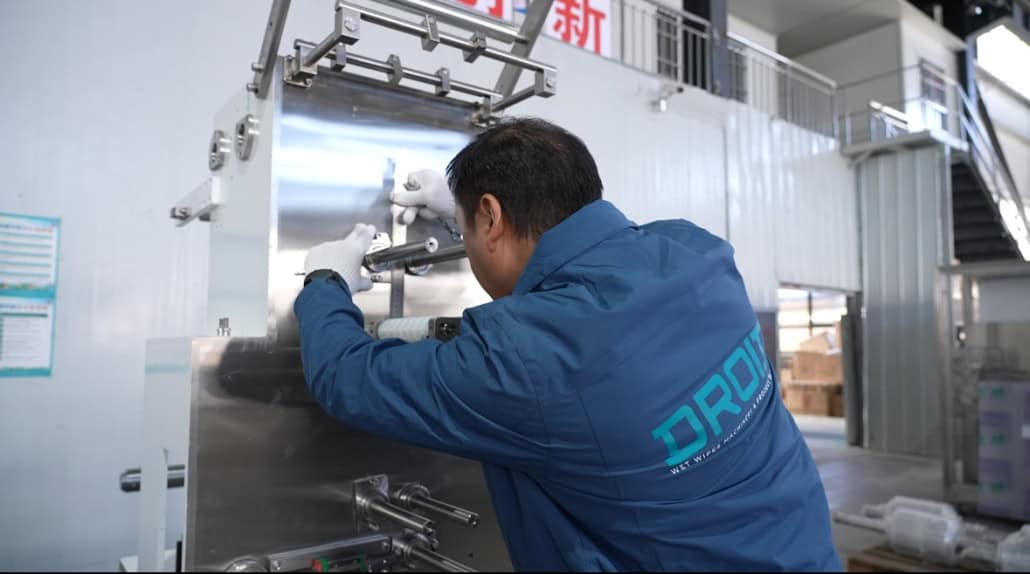
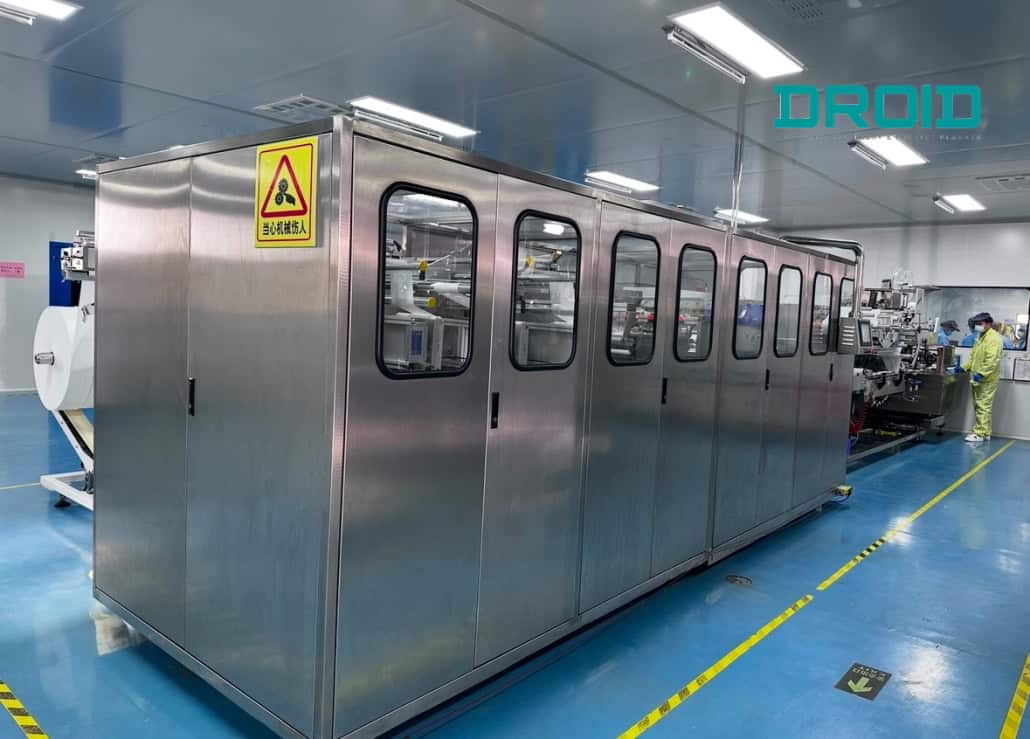
One of the most important factors influencing the overall cost of ownership in wet wipe production is machine stability. A reliable wet wipe machine maintains smooth and predictable production cycles, ensuring continuous operation at high rates without frequent interruptions. Conversely, machines that lack adequate motion control, precision, or structural stiffness often struggle to maintain alignment and synchronization, especially during continuous operation. This can lead to periodic micro-stoppages, which may seem trivial on their own but can ultimately result in significant output losses.

Both planned and unplanned downtime lead to lost income. When a machine is not operational, deliveries are delayed, labor is underutilized, and fewer wipes are produced per minute. Unstable machinery often requires frequent maintenance, troubleshooting, and adjustments, increasing the need for skilled operators and prolonging recovery time after each halt. In a high-volume manufacturing environment, downtime represents one of the most costly hidden expenses. Even minor inefficiencies can lead to thousands of lost packs per shift.

In addition to causing short-term output losses, poor machine stability negatively impacts long-term operational efficiency and the cost structure. Frequent stoppages can reduce equipment lifespan, increase maintenance needs, and lead to greater component wear and tear. Moreover, they can lead to inconsistent product quality, increased consumer complaints, and higher rejection rates. To minimize downtime and protect long-term profitability, it is essential to invest in a wet wipe machine that is stable. This includes features such as a sturdy frame, high-quality components, and advanced control systems.

Wet wipes machine manufacturer 1030x574 - What Affects Wet Wipes Machine Ownership Cost
Production Efficiency and Output Rate

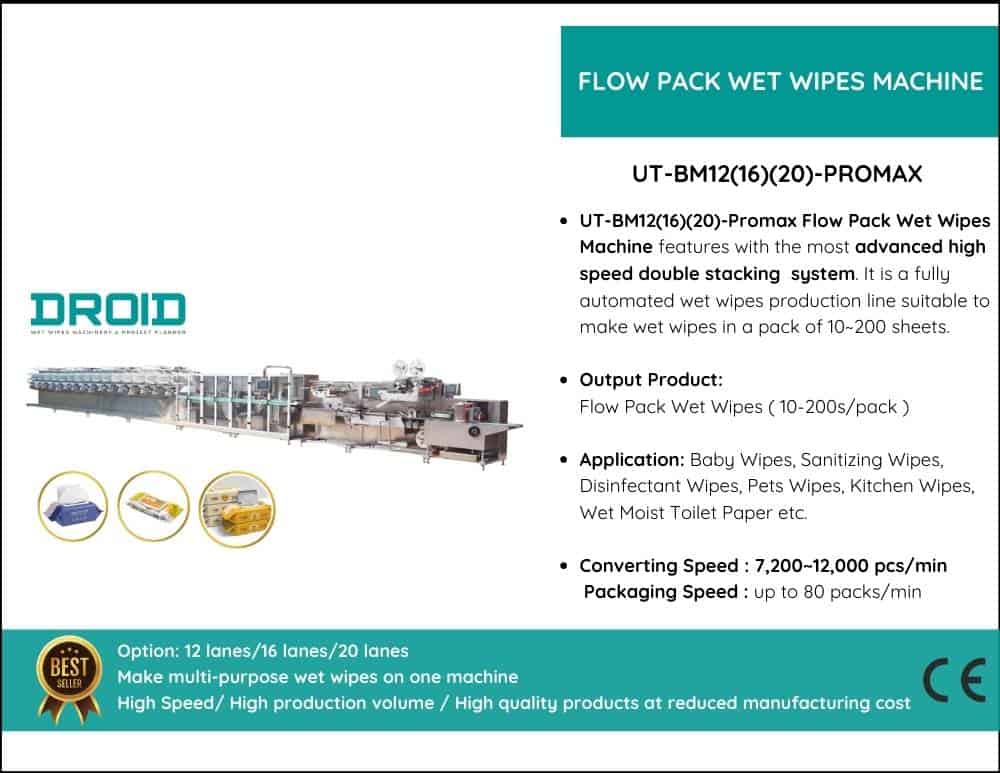
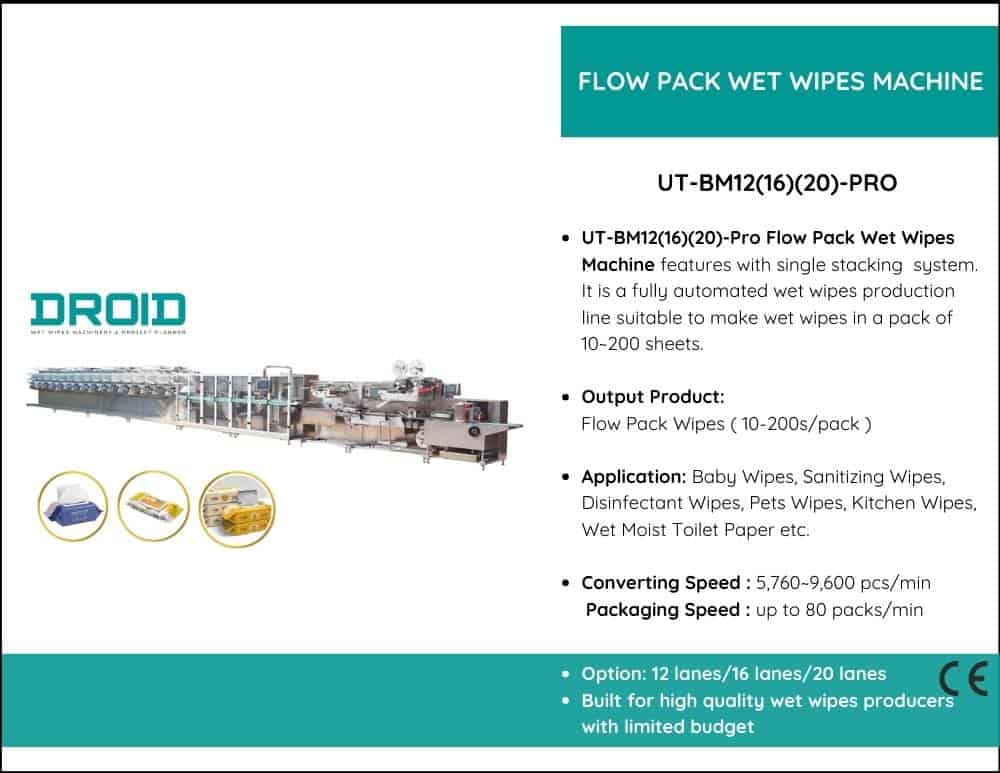
The key factors that determine your cost per wipe and, eventually, your profitability are production efficiency and output rate. A high-performance wet wipes machine is characterized by its capacity to operate reliably at high speeds in actual production circumstances rather than by its maximum speed on paper. Manufacturers may increase throughput without lengthening working hours by using machines that sustain steady output with few stoppages, ensuring that every production hour is fully utilized.

The output rate directly impacts the distribution of fixed expenses. Regardless of output volume, costs including labor, manufacturing overhead, utilities, and depreciation are essentially constant. These fixed expenses are spread across more units when your machine produces more packs in the same amount of time, thereby lowering the cost of each wipe. On the other hand, firms must invest more time and resources to achieve the same production goal because inefficient machinery results in lower real output, thereby raising total operating costs.

True efficiency, however, encompasses consistency, dependability, and process improvement in addition to speed. By removing bottlenecks and reducing idle time between processes, a well-designed wet wipes machine guarantees coordinated operations throughout cutting, folding, wetting, and packing. Manufacturers can increase productivity without sacrificing product quality through this integrated efficiency, giving them a significant competitive edge in cost management and market responsiveness.

wet wipes machine manufacturer DROID 3 1030x739 - What Affects Wet Wipes Machine Ownership Cost

Material Utilization and Waste Control

Utilization efficiency is essential for overall profitability, as material costs are among the most significant factors in wet wipe production. A well-designed wet wipe machine reduces waste by ensuring accurate handling of nonwoven fabric, lotion dosage, and packaging materials. In contrast, poorly constructed machines often suffer from misalignment, uneven wetting, and irregular cutting, which lead to increased raw material consumption and a higher cost per wipe.

Although it may not be immediately obvious, industrial waste can accumulate rapidly. Hidden inefficiencies include fabric trimming losses, excessive lotion dosage, rejected packets due to inadequate sealing, and uneven folding. Over time, even a small amount of waste, like 2-3%, can result in substantial financial losses, particularly in high-volume operations. These losses represent a significant financial burden in daily production, yet they are often overlooked during equipment selection.

Advanced wet wipe manufacturing processes address these issues through effective process control and precise engineering. Features such as accurate tension control, servo-driven synchronization, and improved dosing systems ensure materials are used efficiently and reliably. By cutting waste and optimizing resource utilization, manufacturers can significantly reduce production costs while maintaining excellent product quality—transforming what is often perceived as a minor detail into a crucial driver of profit.

wet wipes machine manufacturer DROID 2 1 1030x651 - What Affects Wet Wipes Machine Ownership Cost

Labor Requirements and Automation Level

The level of automation in your equipment significantly impacts labor costs, which are a major and ongoing consideration in wet wipes manufacturing. Traditional or semi-automatic wet wipe machines often require a large number of personnel to input ingredients, adjust settings, monitor operations, and manage packing. This not only raises direct labor costs but also introduces unpredictability related to human error, especially in high-speed production environments.

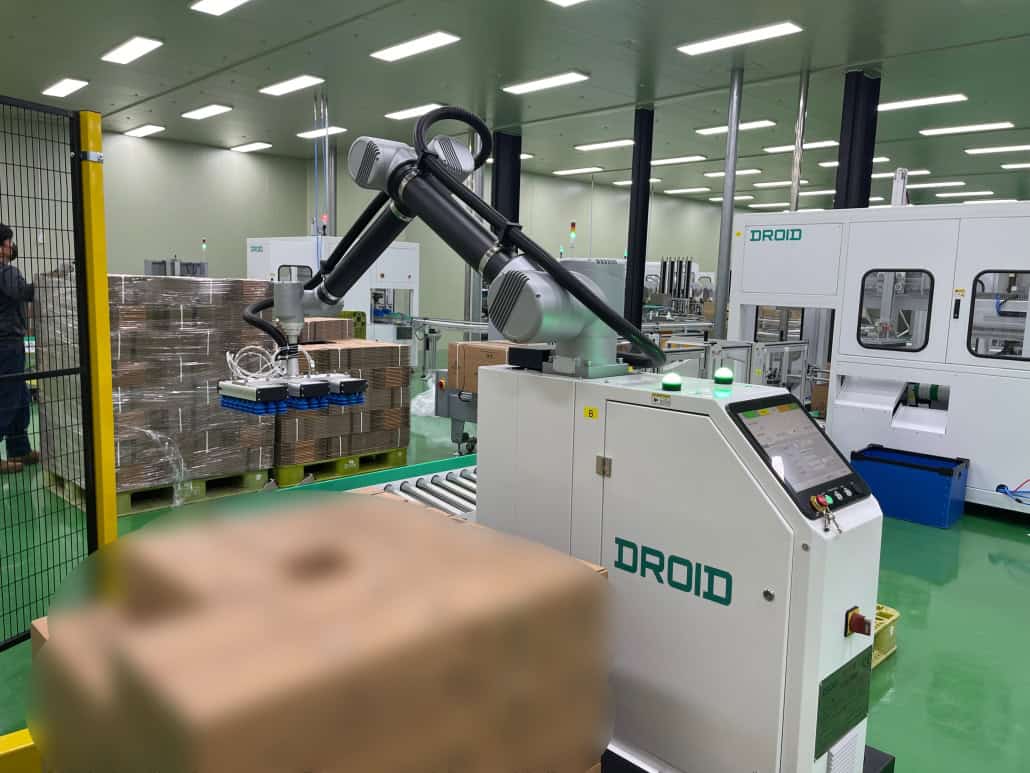
In contrast, higher levels of automation greatly change this cost structure. Fully automated wet wipes manufacturing lines seamlessly integrate processes such as cutting, folding, wetting, packing, and even case packing and palletizing. As a result, manufacturers can operate with a smaller workforce while maintaining consistent production, as fewer manual interventions are needed. This reduces dependence on specialized labor, lessens training requirements, and minimizes operational disruptions caused by employee fatigue or turnover.

Moreover, automation enhances overall operational efficiency and reliability. Automated systems provide repeatable accuracy, steady performance, and real-time process control, which are difficult to achieve manually. Consequently, automation plays a crucial role in lowering the total cost of ownership and increasing long-term profitability, as the savings from reduced labor, improved consistency, and enhanced productivity far exceed the initial investment over time.

wet wipes machine manufacturer DROID 1030x755 - What Affects Wet Wipes Machine Ownership Cost

Changeover Time and Production Flexibility

Changeover time significantly impacts production efficiency and profitability, especially in markets with diverse product ranges and rapidly changing demand. Manufacturers of wet wipes often need to switch between various formats, including pack sizes, sheet counts, materials, and packaging designs. Lengthy, complex changeover procedures can lead to machines losing hours of production time, reducing overall equipment utilization, and making it harder to respond quickly to customer demands.

Moreover, slow changeovers generate hidden operating costs. Frequent manual recalibration increases the likelihood of setup mistakes and material waste, and prolonged downtime during adjustments means fewer production hours each day. This is especially critical for producers handling small-batch orders or multiple SKUs, where frequent changeovers are necessary. Over time, a machine that takes several hours to switch formats can significantly diminish production capacity, directly affecting revenue.

Modern wet wipe production is designed with adaptability in mind. Thanks to features like digital parameter presets, modular design, and quick-adjust mechanisms, format changes can often be completed in 30 to 60 minutes or less. This allows manufacturers to maximize production uptime, operate multiple product lines on a single machine, and quickly respond to market demands. Faster changeovers are essential for productivity, cost management, and business agility in today’s competitive landscape; they are not just a convenience.

wet wipes machine manufacturer DROID 4 1030x624 - What Affects Wet Wipes Machine Ownership Cost

Energy Efficiency and Component Quality

Wet wipes production’s long-term profitability is strongly impacted by energy usage, a constant operational expense. Even though it may not seem important compared to labor or raw materials, inefficient machinery can eventually lead to a significant increase in power consumption, particularly in high-speed, round-the-clock operations. Air compressors, vacuum systems, heating systems, and motors all add to the overall energy use. Energy-inefficient machines often use more power to achieve the same results, thereby increasing the cost per wipe with each manufacturing cycle.

Both operational dependability and energy efficiency depend heavily on component quality. Superior electrical components, servo systems, and motors are made to run more precisely and with less energy loss. They guarantee improved load handling, reduced friction, and better motion control, improving machine stability while using less energy. Lower-grade parts, on the other hand, are more likely to break, cause inefficiencies, and require more frequent calibration, which raises maintenance costs and causes unplanned downtime.

Purchasing a wet wipes machine with high-quality, globally renowned parts yields long-term benefits. These parts usually offer greater worldwide availability for replacements, a longer service life, and more reliable performance under challenging circumstances. As a result, there are fewer production interruptions, less frequent maintenance, and more energy-efficient operations. Over time, the combination of reduced energy expenditures and increased dependability greatly lowers the total cost of ownership and maximizes return on investment.

wet wipes machine0 - What Affects Wet Wipes Machine Ownership Cost

Spare Parts Availability and Maintenance Cost

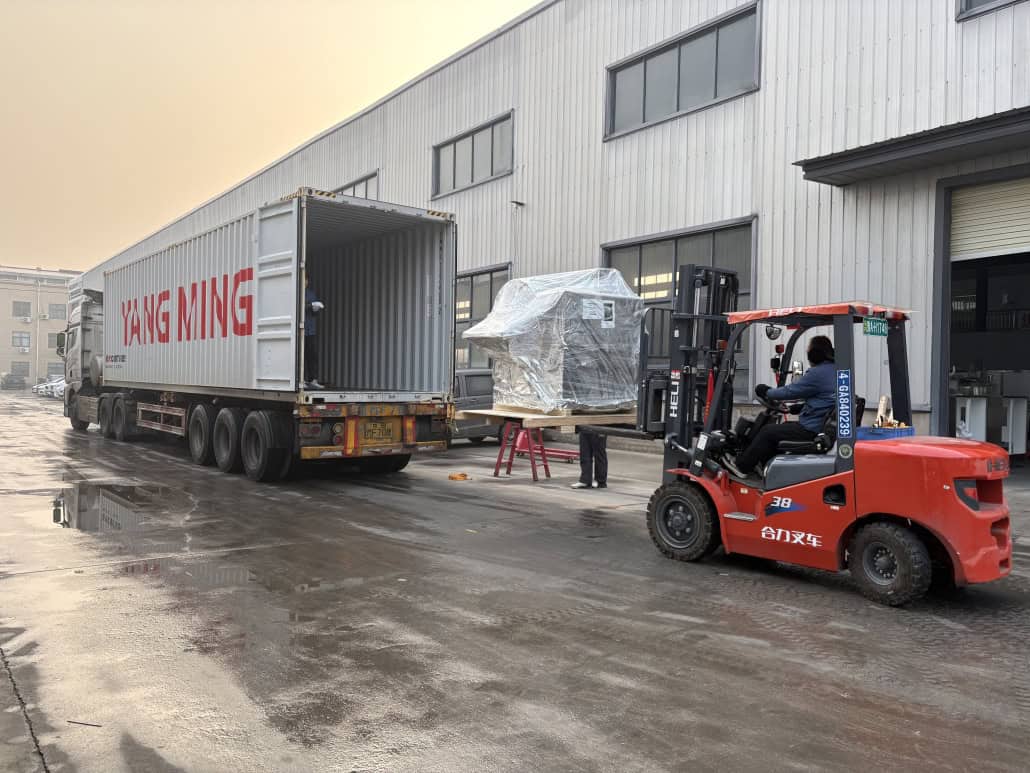
The availability of spare parts has a significant impact on both long-term ownership costs and equipment uptime. Over time, even the most sophisticated wet wipes machine will need maintenance and part replacement. The speed at which such parts may be found and fitted is the main distinction. Long lead times for machines built with non-standard or regionally scarce components can result in prolonged production stoppages, potentially affecting delivery schedules and earnings.

Maintenance costs include replacement frequency, accessibility, and efficiency, in addition to spare parts costs. Due to subpar parts or a lack of longevity, poorly built machines may require regular maintenance, increasing labor hours and parts consumption. Furthermore, complicated machine architectures may make maintenance time-consuming, requiring qualified specialists and more downtime for even little repairs. Over time, these elements accumulate, making maintenance a major operational strain.

By using premium, globally recognized parts and providing a defined spare parts plan, a well-designed wet wipes machine reduces these risks. While careful machine design enables easier access and faster repair, standardized components ensure faster worldwide availability. Manufacturers may drastically cut downtime, manage maintenance costs, and sustain steady, continuous production by combining proactive spare parts planning with robust supplier support.

wet wipes machine manufacturer DROID 8 1030x773 - What Affects Wet Wipes Machine Ownership Cost

Compliance and Documentation Readiness

In the production of contemporary wet wipes, compliance is a critical factor, especially for companies looking to expand internationally. To ensure safety, product quality, and regulatory acceptance, wet wipes machinery must meet established standards, including CE certification and GMP hygiene criteria. Non-compliant machinery can lead to significant issues during installation, inspection, or operation, potentially resulting in delays, additional modification costs, or even rejection by local authorities.

During the purchasing process, proper documentation is vital yet often overlooked. For a project to be successful, complete technical documentation is essential. This includes risk assessments, electrical and pneumatic schematics, operating manuals, and validation data. Manufacturers may face challenges during factory audits, customs clearance, or certification processes if they lack the necessary paperwork. Inadequate or missing documentation can delay project timelines and increase the costs of compliance retrofitting after the equipment has been delivered.

A comprehensive documentation package should be included with any wet wipes machine manufactured to international standards from the start. This preparation ensures quicker approvals, smoother installations, and greater confidence during audits. More importantly, it minimizes compliance risks and unforeseen expenses throughout the machine’s lifecycle. Investing in a supplier that prioritizes both engineering and documentation preparation can help protect your project schedule, operational stability, and long-term business reputation while ensuring regulatory compliance.

regulatory compliance - What Affects Wet Wipes Machine Ownership Cost

Supplier Capability and Long-Term Support

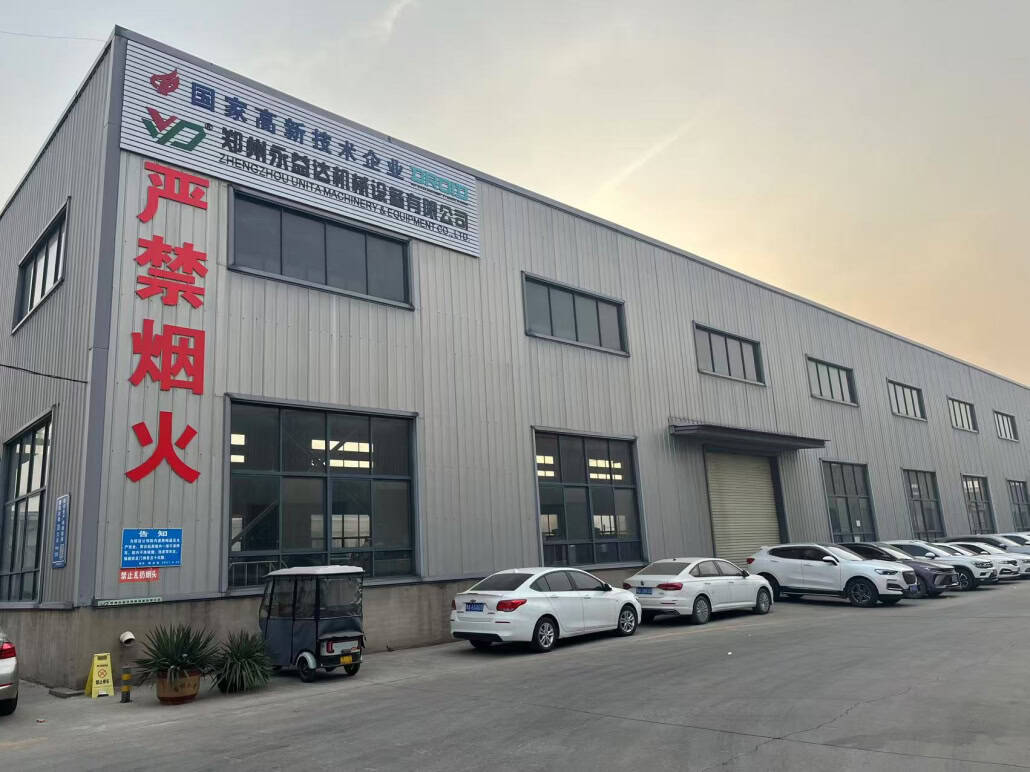
Your equipment provider’s capabilities largely influence the true cost of ownership. A wet wipes machine is a long-term asset that requires ongoing technical maintenance, upgrades, and optimization; it is not a one-time purchase. Suppliers with strong technical skills can deliver precise line designs, anticipate potential hazards, and ensure that the equipment is customized to meet your specific production needs. In contrast, providers with less technical expertise may only supply basic equipment without fully understanding your application, leading to inefficiencies and costly modifications later.

The real advantage comes with long-term support. Reliable vendors offer structured post-purchase services, such as operator training, installation guidance, remote troubleshooting, and prompt technical support. Access to a skilled and timely support team can significantly reduce downtime and prevent minor issues from escalating into major disruptions, which can occur in any production environment. Without this kind of assistance, manufacturers are often left to handle challenging technical problems on their own, increasing operational risk and costs.

A strong supplier contributes to your company’s long-term success not just by providing immediate support but also by offering regular updates, process optimization advice, and spare parts planning. This partnership allows producers to quickly adapt to changing market demands without investing in entirely new systems. Choosing a provider with a proven track record of success and commitment ensures stability, scalability, and long-term profitability, going beyond merely acquiring a machine.

Wet Wipes Factory 1030x772 - What Affects Wet Wipes Machine Ownership Cost

Why Ownership Cost Matters More Than Price

One of the most common and costly mistakes consumers make when purchasing a wet wipes machine is focusing solely on the price. The total expenses over the machine’s lifespan will far exceed the initial purchase cost. Daily expenses such as labor, maintenance, energy consumption, downtime, and material waste accumulate over time. While a less expensive machine might seem attractive at first, it can significantly reduce profitability over the next five to ten years if it operates inefficiently or unreliably.

Understanding the total cost of ownership provides a clearer picture of how your investment will ultimately impact your business. Although a high-quality wet wipes machine may have a higher upfront cost, it typically offers greater stability, higher production, reduced waste, and reduced reliance on personnel. These advantages lead to enhanced manufacturing efficiency and lower costs per wipe. In the long run, investing in a superior machine is the most cost-effective choice, as the savings from improved performance will far outweigh the initial price difference.

The ultimate goal is to build the most profitable organization, not simply to purchase the cheapest equipment. Buyers who consider the total cost of ownership prioritize long-term benefits over immediate savings. By investing in a machine designed for efficiency, reliability, and scalability, manufacturers position themselves for sustained growth, higher profit margins, and a competitive advantage.

20943665 1030x1030 - What Affects Wet Wipes Machine Ownership Cost

Key Takeaway for Buyers

When evaluating a wet wipes machine, it’s essential to change your perspective: you are not just purchasing a machine, but investing in a long-term production system that will influence your cost structure for years to come. Your actual profitability depends on factors such as efficiency, stability, and operational success; the purchase price is just the starting point.

Smart buyers focus on consistent production, minimizing downtime, effective material usage, and strong supplier support, as these elements lead to real results. These factors directly affect your market competitiveness and your cost per wipe. A machine that reliably operates at high efficiency will always outperform a less expensive model prone to instability, waste, and frequent disruptions.

Ultimately, the best choice is not the lowest price but the option that offers the largest return on investment. Choose a wet wipes machine backed by a knowledgeable partner, built with high-quality components, and designed for long-term performance. This approach can help reduce your overall cost of ownership, protect your profit margins, and establish a manufacturing line that consistently generates profits.

wet wipes machine manufacturer DROID 1 1030x773 - What Affects Wet Wipes Machine Ownership Cost

It includes purchase price, operating costs, maintenance, downtime, labor, and efficiency over the machine’s lifespan.

Stable machines reduce downtime, improve efficiency, and lower production losses.

Automation reduces labor costs, increases consistency, and improves production efficiency.

Material waste directly increases production cost per wipe and reduces profit margins.

Choose high-quality machines with reliable components and strong technical support.

Faster changeovers increase flexibility and reduce lost production time.

Only if they are stable, high-speed machines that are unstable might result in higher losses.

Strong support reduces downtime, ensures spare parts availability, and improves long-term reliability.

International markets need GMP-compliant design and CE certification.

No, lower initial costs often lead to higher ongoing costs.

Ask For A Quote 

4 + 4 = ?

Contact Form