• How to Verify a Wet Wipes Machine Factory Before You Buy - How to Verify a Wet Wipes Machine Factory Before You Buy

How to Verify a Wet Wipes Machine Factory Before You Buy

A Practical Due Diligence Guide for Global Buyers

Investing in a wet wipes machine goes beyond merely purchasing equipment; it represents a commitment to a long-term production system that will significantly impact your profitability, efficiency, compliance status, and product quality.

At first glance, many providers in today’s global marketplace may seem similar. It can be easy for companies to project the image of a “true manufacturer” through polished websites, attractive brochures, and the use of well-known component brands. However, not every business that sells wet wipes machines has the capability to manufacture, develop, or provide ongoing maintenance.

This article outlines organized, manageable steps for international buyers, demonstrating how to evaluate a wet wipes machine factory before signing a contract.
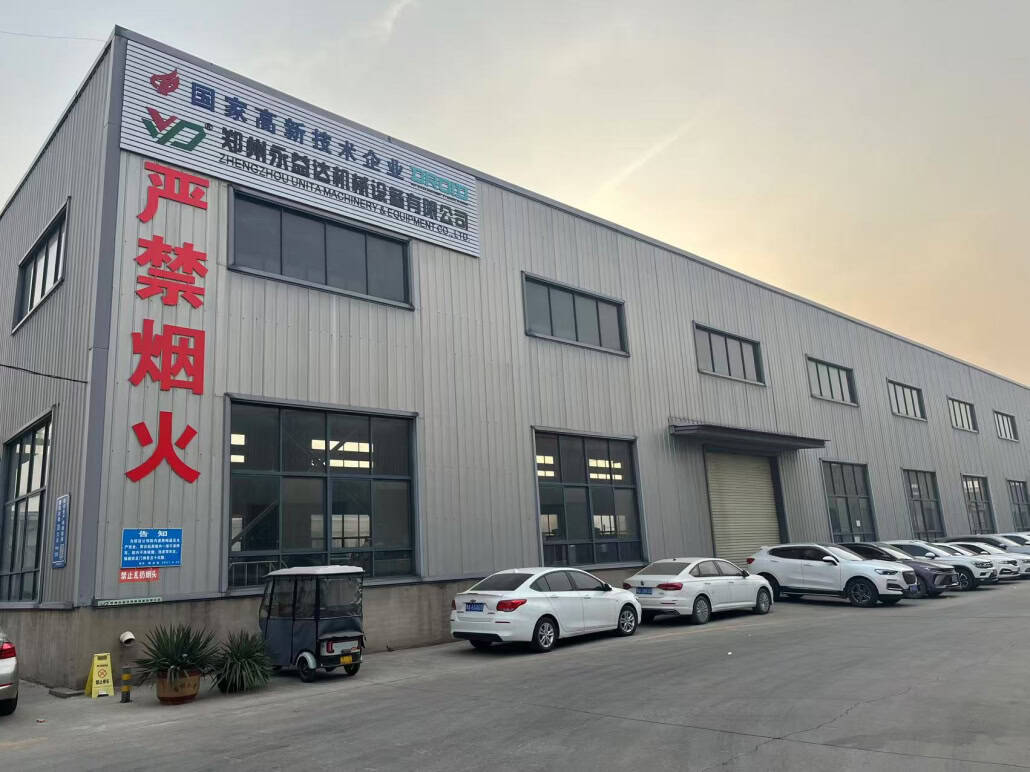
Verify: Manufacturer or Trading Company?

Verifying if you are working with a legitimate manufacturer or a trading organization is the first and most crucial stage in the supplier due diligence process. The engineering drawings, mechanical design, PLC programming, and assembly procedures are all owned by the actual wet wipes machine manufacturer. They run actual manufacturing facilities where whole machines are constructed and tested, steel frames are welded, CNC parts are manufactured, and electrical cabinets are wired. Trading businesses, on the other hand, usually function as middlemen and outsource manufacturing to several workshops, which frequently restricts their technical expertise and long-term accountability.

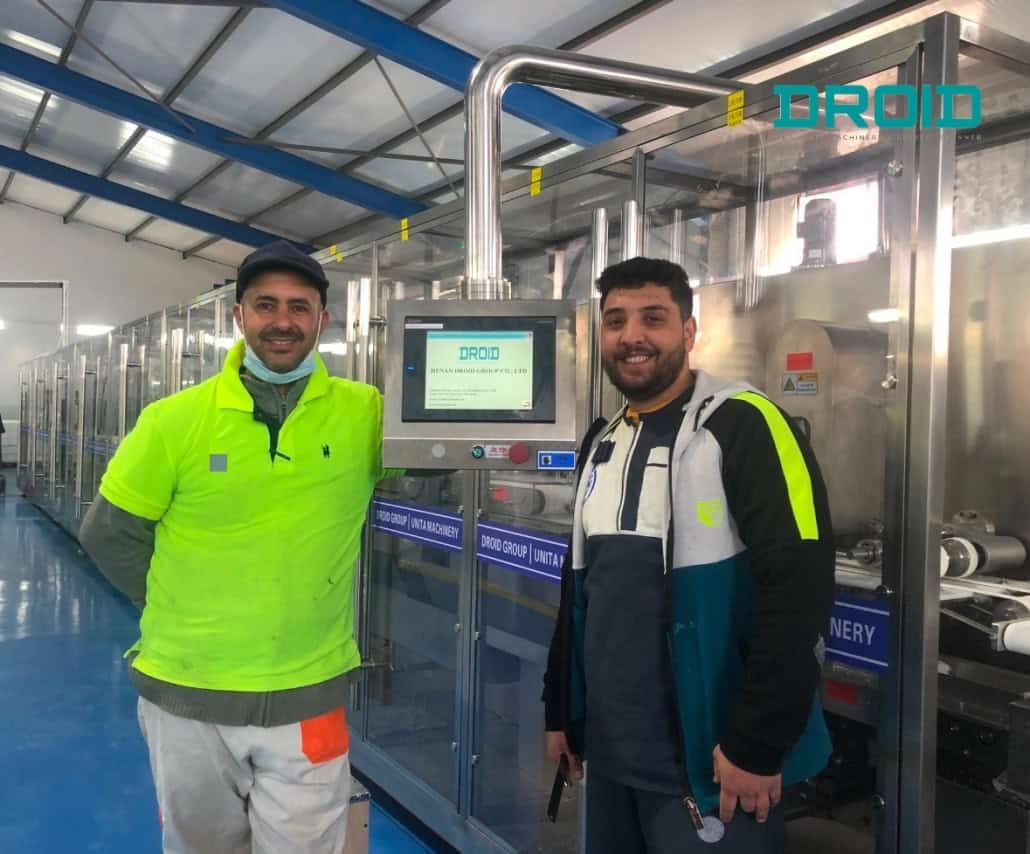
Instead of only quoting speed statistics, an actual manufacturer may provide a thorough explanation of the machine architecture. They comprehend wet-load tension control, dosage precision, structural vibration management, and servo synchronization logic. When asked technical questions, engineering ownership provides the answers rather than pre-written sales pitches. They may set up live video calls to the plant, display internal production lines, and present the engineers in charge of commissioning and programming. However, a trading corporation often avoids thorough walkthroughs and is unable to provide in-depth explanations beyond the most basic requirements.

Structured questions are necessary for verification. Request electrical BOM samples, verify who programs the PLC and HMI, ask about Factory Acceptance Testing (FAT) protocols, and request a live factory tour. Since openness builds confidence, an actual manufacturer welcomes audits. A trader could be hesitant, take their time, or give contradictory paperwork. Knowing who really builds your machine is essential when investing in industrial equipment, especially for the production of wet wipes, as it determines the level of engineering reliability and long-term support you can anticipate.

Wet Wipes Factory 1030x772 - How to Verify a Wet Wipes Machine Factory Before You Buy
Audit Engineering Ownership, Not Just Steel

Many customers place a lot of emphasis on outwardly apparent factors when assessing a wet wipes machine provider, such as frame thickness, machine size, and the equipment’s overall appearance. Steel alone does not determine performance, even when structural integrity is crucial. A wet wipes manufacturing line’s actual value lies in its technical architecture, which includes system integration design, motion-control logic, servo synchronization, and dosing-accuracy algorithms. Even while a machine appears robust on the outside, it may not have the internal technical expertise needed for steady, high-speed, wet-load operation.

When it has actual engineering ownership, the factory is responsible for its own mechanical designs, electrical schematics, PLC programming, HMI interface logic, and servo motion settings. Directly ask: The servo system was designed by whom? Who writes and updates the PLC program? Does the company build the synchronization logic? Could they describe the process of maintaining tension control when using flushable or biodegradable substrates? A genuine manufacturer can guide you through upgrade methods, error correction techniques, and axis coordination. Because they rely on external design sources and do not fully understand the fundamental system, a reseller or assembler usually cannot.

Long-term dependability is unknown in the absence of engineering ownership. Internal knowledge is necessary for troubleshooting, performance optimization, format modifications, and software upgrades. Every change becomes more costly, risky, and slower if the provider does not control the code or design. You may be confident that you are investing in a manufacturing system supported by knowledge rather than merely a metal framework by auditing engineering capabilities. Performance in the production of wet wipes starts with programming, not with paint or steel.

regulatory compliance - How to Verify a Wet Wipes Machine Factory Before You Buy

Inspect Component Series, Not Just Brand Names

Many manufacturers of wet wipe machines promote internationally recognized component brands such as Delta, Siemens, Mitsubishi, and Schneider. While brand reputation is essential, it doesn’t tell the whole story. The specific series and performance grade of the components being used significantly affect machine performance.

There is a wide range of product tiers available from global manufacturers, ranging from entry-level economy versions to advanced motion control systems designed for high-speed, multi-axis industrial applications. For example, a wet wipe production line with over 20 axes, which requires precise synchronization among processes such as unwinding, folding, cutting, stacking, dosing, and packing, would not be suitable for a basic PLC or a “micro” servo series.

Although lower-tier components may have lower initial costs, they often come with limitations in processing speed, precision, expandability, and long-term stability. These differences, though not always visible on the surface, can have a significant impact on performance in wet-load situations and during continuous, round-the-clock operations.

To ensure accurate verification, request specific model numbers for PLCs, servo drives, motors, and HMIs instead of just the brand names. You should also check whether the system uses a high-performance motion control series by requesting the electrical Bill of Materials (BOM). Reputable manufacturers should be able to explain their selection of specific models and be transparent about their component architecture. When evaluating a wet wipe machine, it’s crucial to focus on the component series rather than just the marketing labels, as the system grade ultimately determines performance.

wet wipes machine manufacturer DROID 1 1030x773 - How to Verify a Wet Wipes Machine Factory Before You Buy

Demand a Structured FAT Process

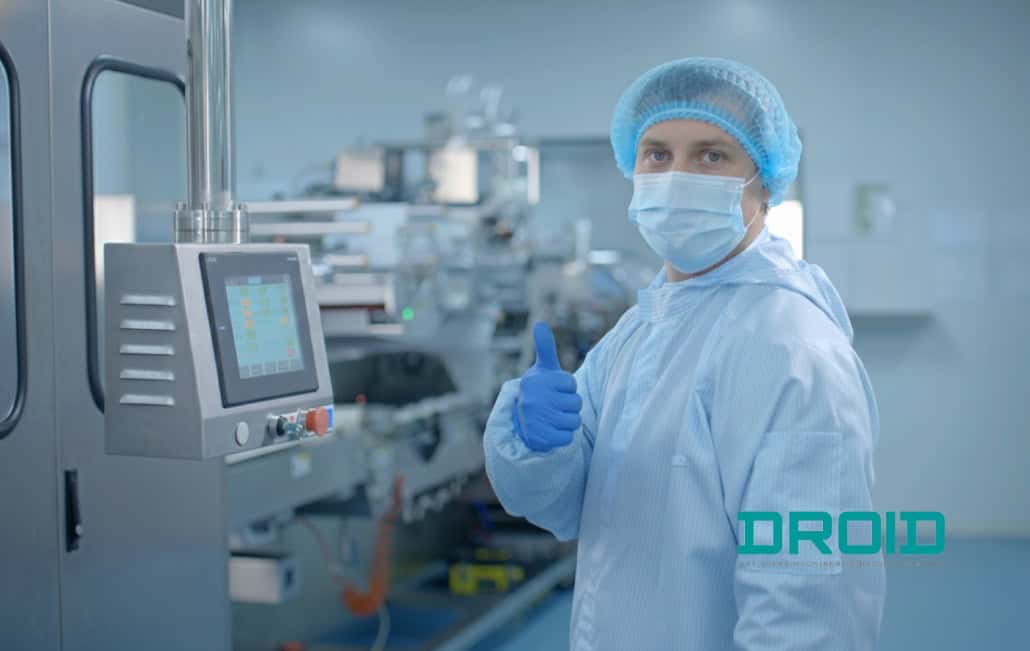
One of the most essential precautions before your wet wipes machine leaves the manufacturer is a manufacturer Acceptance Test (FAT). A structured FAT confirms that the machine operates as promised, not just in a dry run but also in actual operational conditions. Without recorded testing, purchasers run the risk of discovering mechanical instability, dosage irregularities, or synchronization problems only after installation, when fixing them becomes expensive and time-consuming.

Before testing starts, the producer of a professional wet wipes machine should give a straightforward FAT process. Wet-run experiments using real nonwoven material, complete liquid dosing testing, validation of output speed under load, dimensional accuracy checks, and safety system verification are typical examples of this. Performance should be tested and documented, including wiping weight uniformity, folding accuracy, reject rate, and consistent working speed (rather than peak potential speed). Additionally, interlocks, emergency stops, and electrical systems need to be inspected and recorded.

Transparency is equally crucial. Customers should be allowed to observe FAT in person or via live video, with sample and data examination conducted in real time. Before a shipment is approved, a serious manufacturer will disclose measurement data, videos, and FAT reports. It is a red flag if a provider claims that “FAT is not necessary” or performs a quick-dry test. When investing in industrial equipment, a structured FAT process ensures your wet wipes manufacturing line is operationally ready, safeguards your cash, and verifies technical integrity.

wet wipes machine manufacturer DROID 9 1030x854 - How to Verify a Wet Wipes Machine Factory Before You Buy

Check Compliance Readiness (CE Is Not Optional)

In many countries around the world, compliance is a legal and practical necessity rather than a marketing term. CE conformance is required if your wet wipes machine will be used in Europe, Australia, or other controlled areas. A professional manufacturer must be able to offer a comprehensive technical file that includes electrical schematics that comply with EN standards, risk assessment documents, safety validation (e.g., ISO 13849), and the appropriate component certificates. It is not compliant to only affix a CE label to the machine.

A machine that is really compliance-ready is one that was built with international safety and electrical standards in mind from the start. This comprises guarded moving components, safety relays or safety PLC systems, grounding design, appropriately rated emergency stop circuits, and short-circuit protection. Additionally, it indicates that the manufacturer can articulate how their safety design meets the performance level (PL) specifications. It is a warning sign if a provider is unable to explain safety category levels or give a documented risk assessment.

Request a compliance document overview before signing a contract. Request samples of CE declarations from prior export initiatives. Verify that the manufacturer prepares the technical documentation and not a third-party agency. Failure to comply with regulations when buying industrial equipment might cause delays in installation, prevent customs clearance, or even halt production once it has been commissioned. Being prepared for compliance safeguards not just your investment but also your long-term operational stability and legal standing.
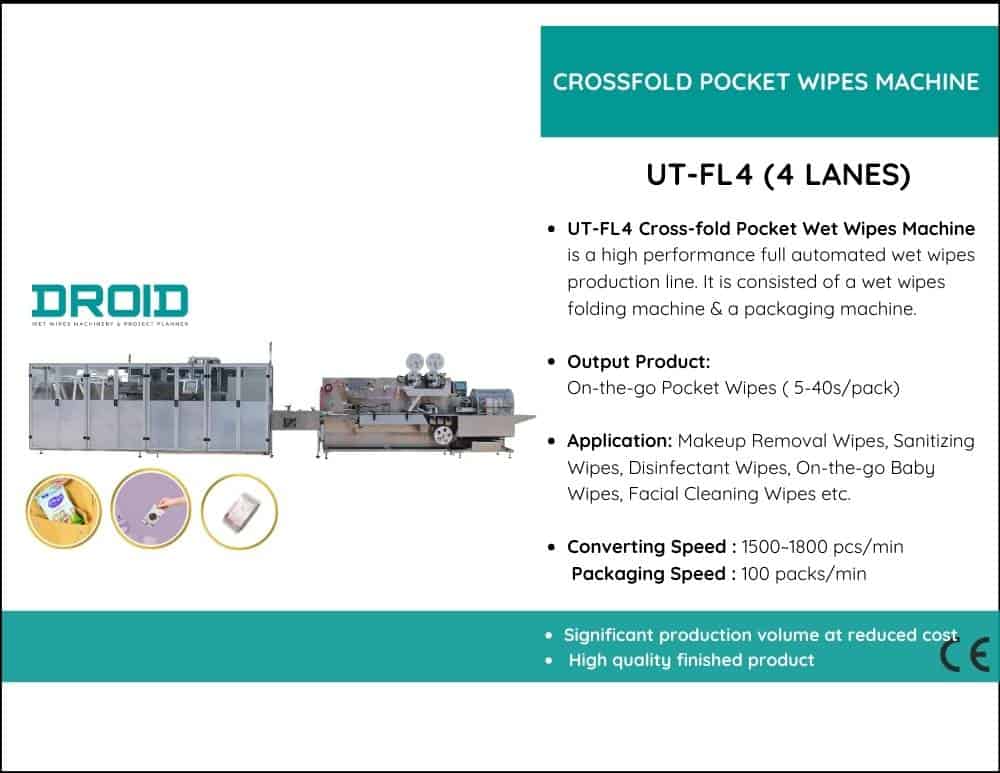
wet wipes machine manufacturer DROID 2 1 1030x651 - How to Verify a Wet Wipes Machine Factory Before You Buy

Evaluate International Experience

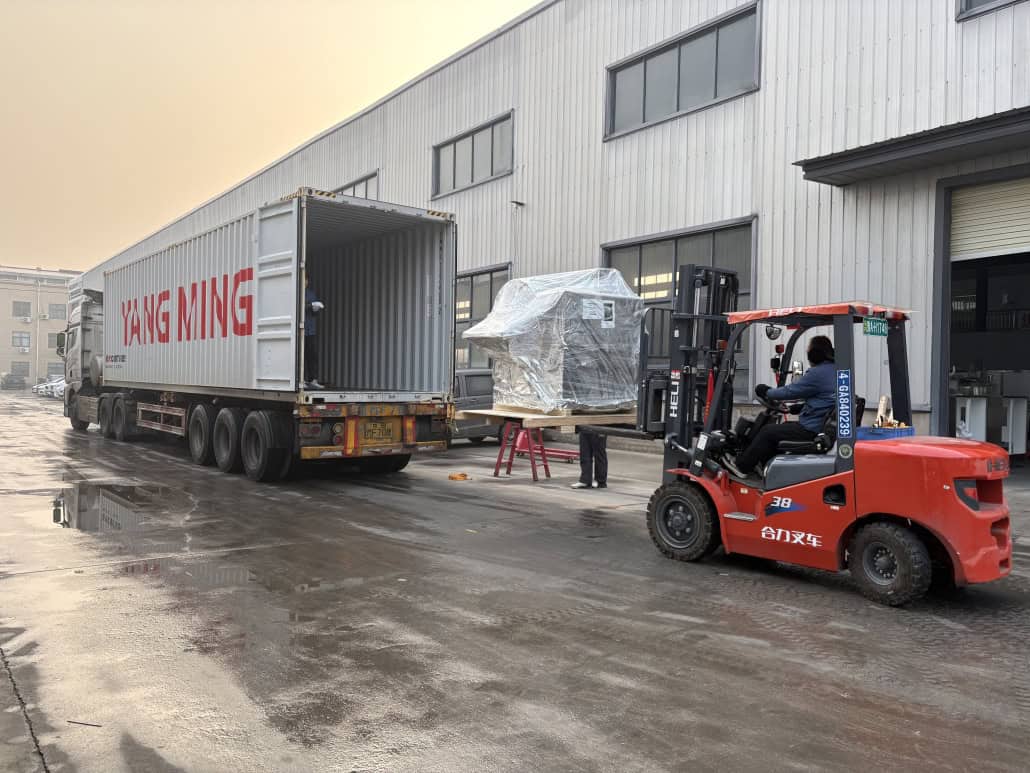
Not every factory that produces wet wipes machines is designed for international markets. Some suppliers ship only occasionally and cater primarily to domestic clients. It often indicates that their systems, documentation, and support structure were not initially designed to meet international standards, though that does not necessarily imply inferior quality. This differentiation is essential to purchasers worldwide. Electrical configuration, compliance preparedness, documentation language, packaging standards, and cross-time zone after-sales response are all influenced by export experience.

A large share of a plant’s output, with extensive international expertise, is usually devoted to export markets. Standardized English paperwork, export-grade electrical cabinets, organized FAT reporting, and knowledge of CE regulations, customs processes, and container-loading standards are often the outcomes. They are aware of remote diagnostic support, appropriate spare part labeling, and vibration prevention for long-distance marine freight. These are not insignificant matters; they have a direct impact on operational continuity and installation time.

Request references from installations abroad to confirm international capabilities. Ask for samples of export paperwork, including English-language user manuals, packing lists, and compliance files. Verify whether they have prior experience commissioning and training engineers overseas. A provider that regularly works with clients worldwide will exhibit organized communication, unambiguous documentation, and consistent project management. International expertise in wet wipes machinery investment demonstrates operational maturity and long-term dependability, not just sales volume.

wet wipes machine manufacturer DROID 2 1030x602 - How to Verify a Wet Wipes Machine Factory Before You Buy

Assess After-Sales Structure, Not Just Promise

After-sales assistance is an integral feature of the equipment used to produce wet wipes, not an add-on service. Even the most sophisticated manufacturing line will eventually need to replace spare parts, optimize software, make format changes, or provide troubleshooting assistance. The genuine concern is not if problems will occur, but rather how promptly and expertly they will be resolved. Whether downtime lasts hours or weeks depends on a provider’s after-sales organization.

Look past statements such as “We provide lifetime support.” Pose structural queries: Does a specific after-sales department exist? What is the number of engineers allocated to projects abroad? Is a documented service system or ticketing system in place? Can a machine’s serial number be used to track spare parts? A serious manufacturer ensures accountability at every level by assigning distinct roles to sales, engineering, manufacturing, and after-sales. When several projects overlap, reaction speed and technical depth may suffer if a single salesperson manages everything from quoting to troubleshooting.

Logistics for spare parts are just as necessary. Verify if the supplier keeps a well-organized inventory of electrical and standard wear parts. Inquire about remote diagnostic capabilities and emergency dispatch schedules. Structured after-sales assistance includes video instructions, software backups, electrical drawings, and commissioning records, all appropriately stored. Promises are simple in industrial manufacture, but systems are more challenging to construct. Assess the support system that underpins the promise while evaluating a wet wipes machine plant. It is essential for long-term production stability.

wet wipes machine1 - How to Verify a Wet Wipes Machine Factory Before You Buy

Verify Long-Term Stability Claims

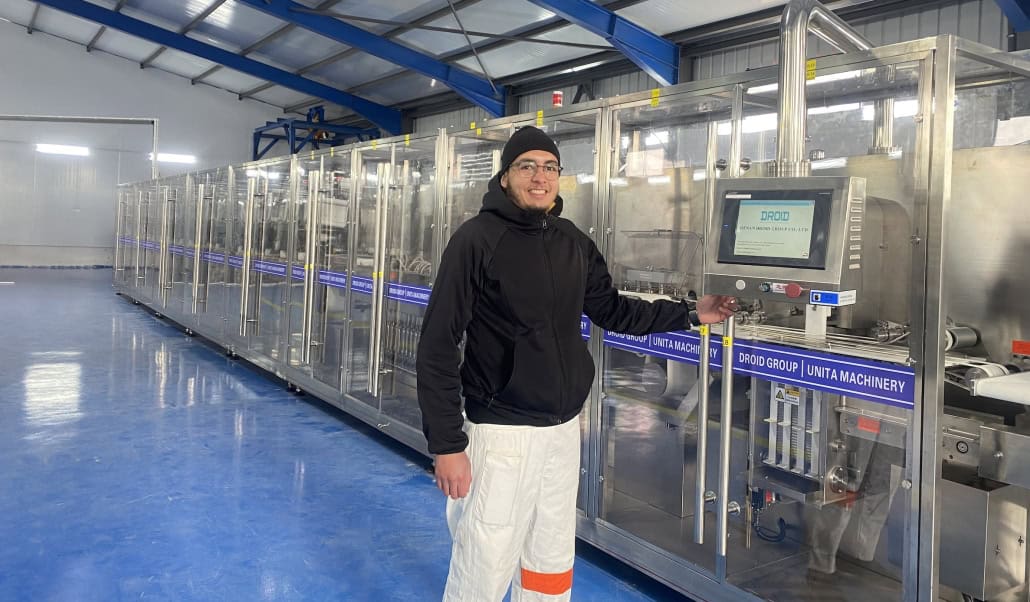
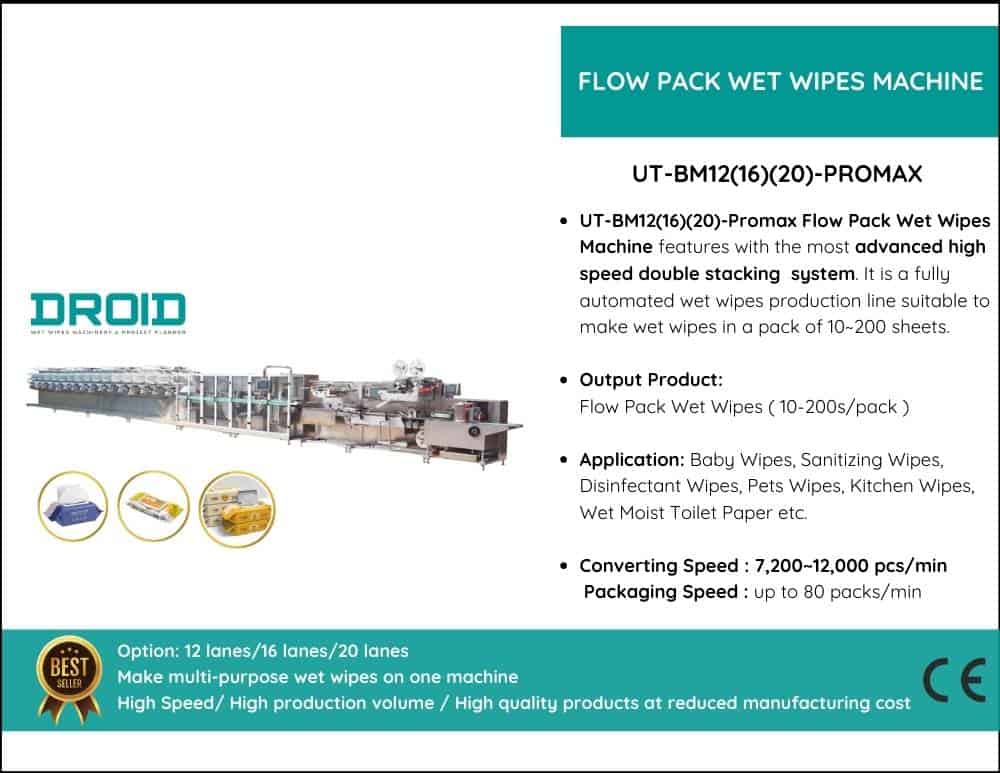
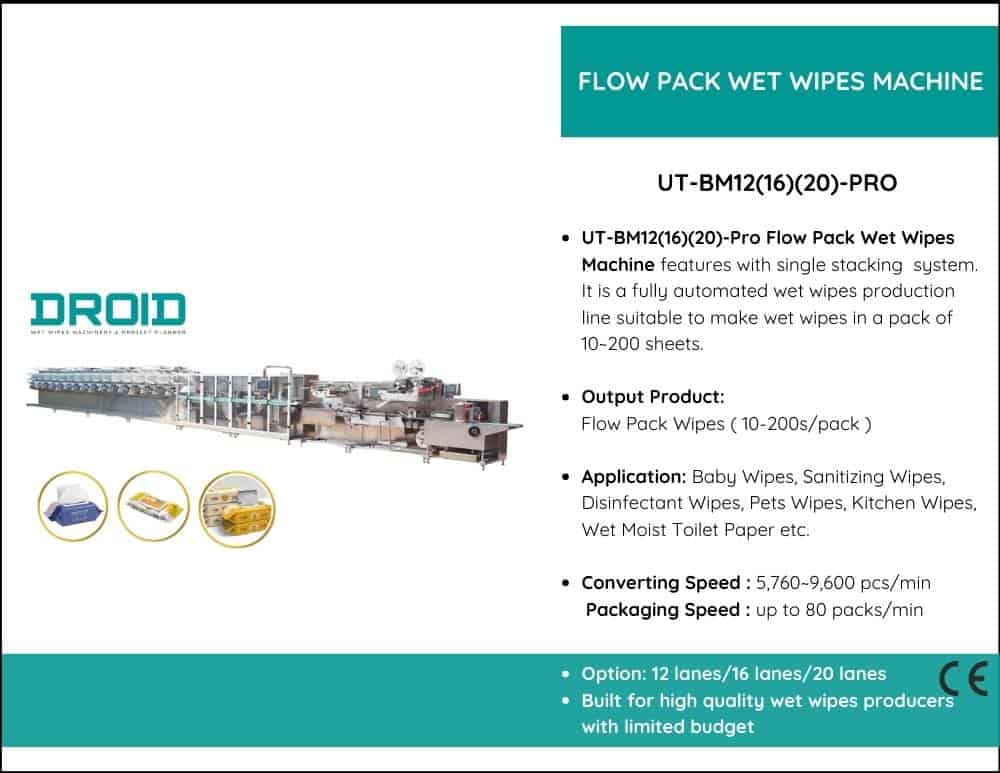
High speed is frequently the most promoted statistic in the wet wipes machines industry. Long-term consistency is what really determines profitability, even when suppliers may push outstanding theoretical results. Higher rejection rates, greater downtime, and higher maintenance costs will result from a machine that promises to produce 120 ppm but struggles to sustain steady output under wet-load conditions. Sustainable performance over continuous operation is the crucial topic, not peak speed.

Inquire about tested operating conditions to confirm stability. During complete wet-run testing, what is the steady production speed? How many hours of continuous testing did the equipment undergo before being shipped? What are the structural thickness and frame weight? How is high-speed vibration managed? The manufacturing of wet wipes presents special challenges, as moisture alters web tension, servo synchronization must be accurate in all directions, and dosing systems must distribute liquid uniformly. True engineering strength is demonstrated by stability in these changing circumstances.

Assess material compatibility as well. Can high-GSM, flushable, or biodegradable substrates be reliably operated by the machine without constant adjustment? Is the control system designed to synchronize servos without drift over an extended period? Ask for performance information rather than simply relying on brochure assertions. A serious producer will distinguish between consistent commercial production and theoretical maximum speed. Long-term consistency in industrial investment safeguards operating margins, yield rate, and brand reputation. Sustainable performance rather than marketing metrics defines a reliable wet wipes production line.

wet wipes machine8.JPG 3 - How to Verify a Wet Wipes Machine Factory Before You Buy

Red Flags That Reveal Risk

When buying a wet wipes machine, the hazards are rarely immediately apparent. The majority of providers display glossy brochures, expertly designed websites, and assured sales pitches. Minor discrepancies, such as evasive explanations, delayed responses, or a lack of technical detail, are typically the warning indicators. By identifying these early warning signs, expensive errors can be avoided.

Reluctance to offer openness is one of the main warning signs. Limited engineering ownership may be indicated if a supplier declines to provide a live factory video tour, is unable to demonstrate in-house machining or assembly facilities, or withholds electrical BOM information. Inconsistent technical explanations are another red flag. The machine may rely on an outsourced design without extensive internal experience if the salesperson repeats general speed promises without providing a comprehensive explanation of servo synchronization logic, wet-load tension management, or dosing accuracy criteria.

Gaps in documentation also indicate risk. Missing compliance files, ambiguous spare parts rules, unstructured after-sales interactions, and confusing FAT processes indicate weak operational systems. Pricing that is aggressively low without thorough component breakdowns might raise suspicions, as lower-tier component series or simpler safety architecture are often the source of cost savings. Lastly, keep an eye out for inconsistent bank accounts, changing firm names, or a murky export history. Transparency in industrial equipment investment reflects capacity. Risk rises when information becomes hard to verify. Early detection of these warning signs safeguards your investment and long-term production stability.

wet wipes machine manufacturer DROID 3 1030x739 - How to Verify a Wet Wipes Machine Factory Before You Buy

Final Checklist Before Signing

Before transferring payment or issuing a purchase order for a wet wipes machine, take a moment to conduct a structured final review. Industrial equipment is a long-term investment, and once production begins, correcting overlooked risks can become significantly more expensive. A disciplined checklist ensures that your decision is based on verified facts—not assumptions or sales assurances.

Factory & Engineering Verification

  • Confirm the factory’s ownership and its physical production capabilities.

  • Conduct a live factory tour (either on-site or via video).

  • Verify the presence of an in-house engineering team (comprising mechanical, electrical, and PLC experts).

  • Review machine drawings and confirm design ownership.

Technical & Component Audit

  • Obtain a complete electrical Bill of Materials (BOM) with exact PLC and servo model numbers.

  • Confirm that the motion-control series is of a high grade (not entry-level micro series).

  • Verify structural specifications, including machine weight and frame thickness.

  • – Ensure compatibility with your target substrates (flushable, biodegradable, etc.).

Performance & Testing Validation

  • Review the structured Factory Acceptance Test (FAT) protocol in advance.

  • Confirm that wet-run testing has been conducted under full-load conditions.

  • Request stable production speed data (not just theoretical peak speeds).

  • Obtain FAT reports and approval documentation prior to shipment.

Compliance & Documentation

  • – Verify that a CE technical file and risk assessment are available.

  • – Confirm ISO 13849 safety validation and compliance with electrical standards.

  • Review sample manuals and assess the quality of English documentation.

After-Sales & Support Structure

  • Confirm the existence of a dedicated after-sales team.

  • Verify spare parts inventory and the emergency dispatch timeline.

  • Clarify commissioning support options (remote and on-site).

  • Document response time commitments in the contract terms.

A professional manufacturer will appreciate this checklist. Transparency strengthens partnerships. If any answers are incomplete or unclear, delay signing until every point is verified. By conducting disciplined due diligence today, you can prevent operational instability in your wet wipes production investment tomorrow.

wet wipes machine0 - How to Verify a Wet Wipes Machine Factory Before You Buy

Verify internal CNC machining, welding, and assembly areas by requesting a live factory video call.

FAT checklist, CE documents, electrical BOM, safety validation, and commissioning reports.

Yes, especially for Europe, Australia, and many international markets.

Limited engineering ownership, inconsistent support, and unclear accountability.

It verifies stable speed, liquid dosing accuracy, and synchronization under wet-load conditions.

Verify the motion-control series grade and request the precise model numbers.

During full wet-load circumstances, stability is more crucial than top speed.

Crucially, downtime in hygiene production is extremely costly.

Systems are usually designed to international standards by factories that produce the majority of their goods for export.

Selecting products based on brand names and pricing without checking the engineering structure.

Ask For A Quote 

0 + 6 = ?

Contact Form