Instead of depending on conjecture or cursory observations, identifying inefficiencies in a wet wipes manufacturing process requires a systematic, data-driven approach. Establishing precise performance benchmarks—what the line should accomplish in terms of speed, production, and quality under steady conditions—is the first step. Finding gaps becomes challenging without a clear baseline. After benchmarks are established, it is easy to determine whether inefficiencies exist and where they are most noticeable by comparing actual performance to these goals.
Overall Equipment Effectiveness (OEE), which divides performance into three quantifiable components: availability, performance, and quality, is a crucial instrument in this process. Manufacturers can determine if losses are due to product failures, decreased speed, or downtime by examining these variables independently. For instance, speed instability is probably the cause of a line with great availability but poor performance, while process inconsistency is indicated by high performance but poor quality. This methodical dissection turns an ambiguous “efficiency problem” into precise, useful insights.
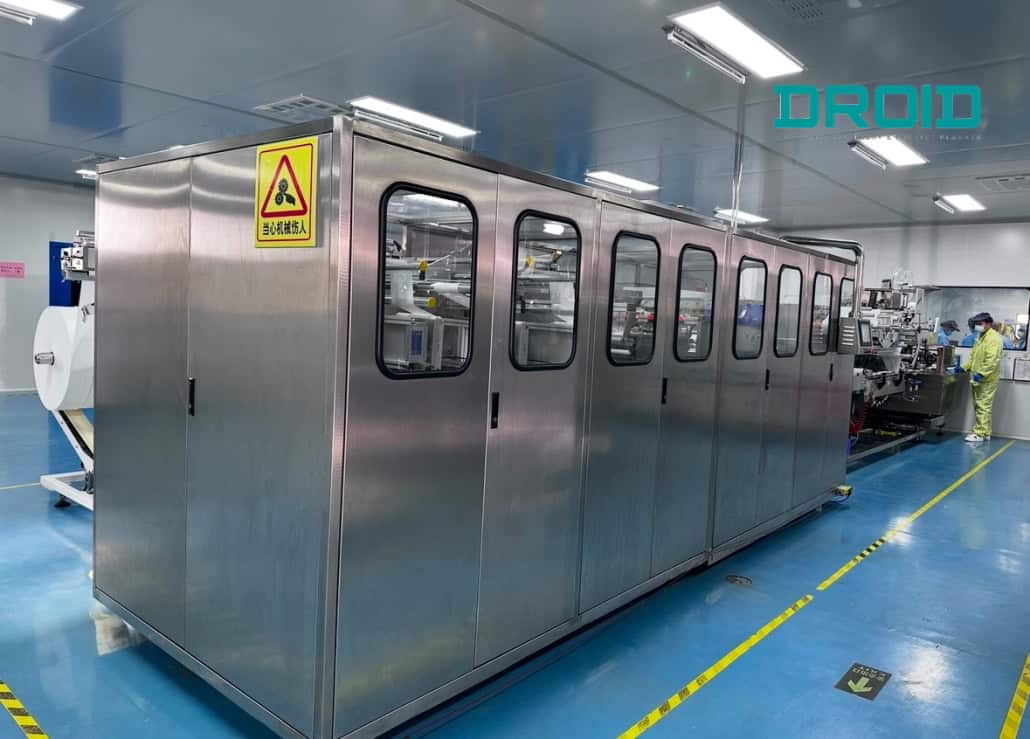
Physical line audits are crucial for identifying hidden inefficiencies that data alone could miss. This entails monitoring material flow, operator contact, and machine behavior in real time. Problems like unnecessary manual adjustments, a poorly designed workstation, or small but frequent disruptions often only surface during an on-site assessment. A comprehensive picture of both technical and operational inefficiencies may be obtained by combining these observations with machine data, such as error logs, cycle times, and downtime records.
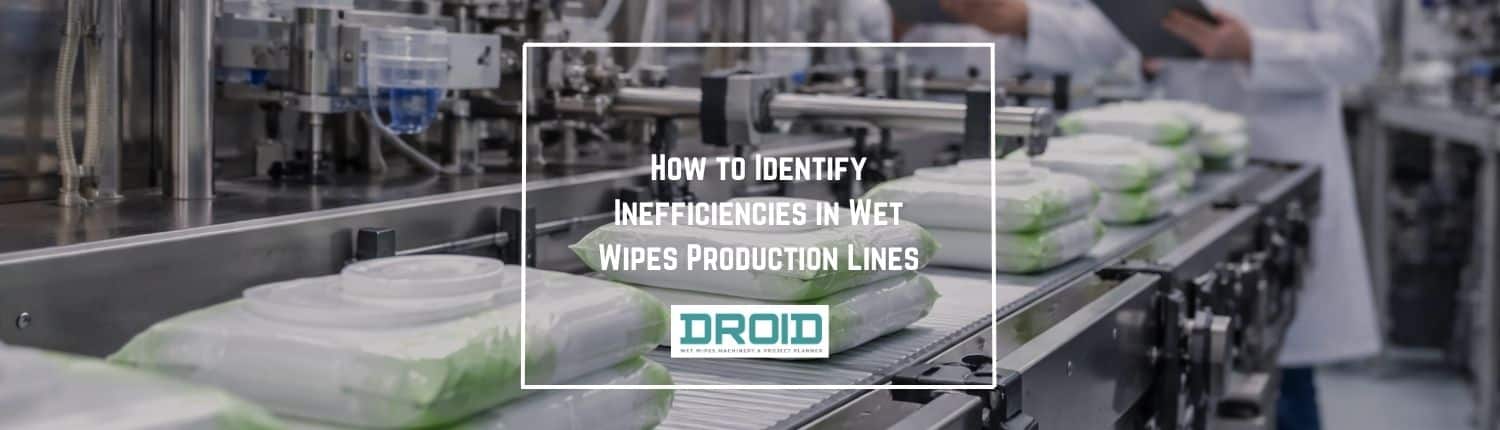
Lastly, system-wide optimization depends on identifying bottlenecks. Because a production line functions as an interconnected system, the output is determined by the slowest or least stable sector. Manufacturers may identify areas of limited or unstable flow by examining each step, including folding, cutting, dosing, packing, and stacking. The efficiency of the whole line increases after the bottleneck is removed. Therefore, a comprehensive diagnostic focuses on aligning the whole production system to run smoothly, consistently, and at maximum capacity rather than resolving specific problems.


 Izmir, Turkey
  Zhengzhou, China
 Seoul, South Korea
  Delhi, India